
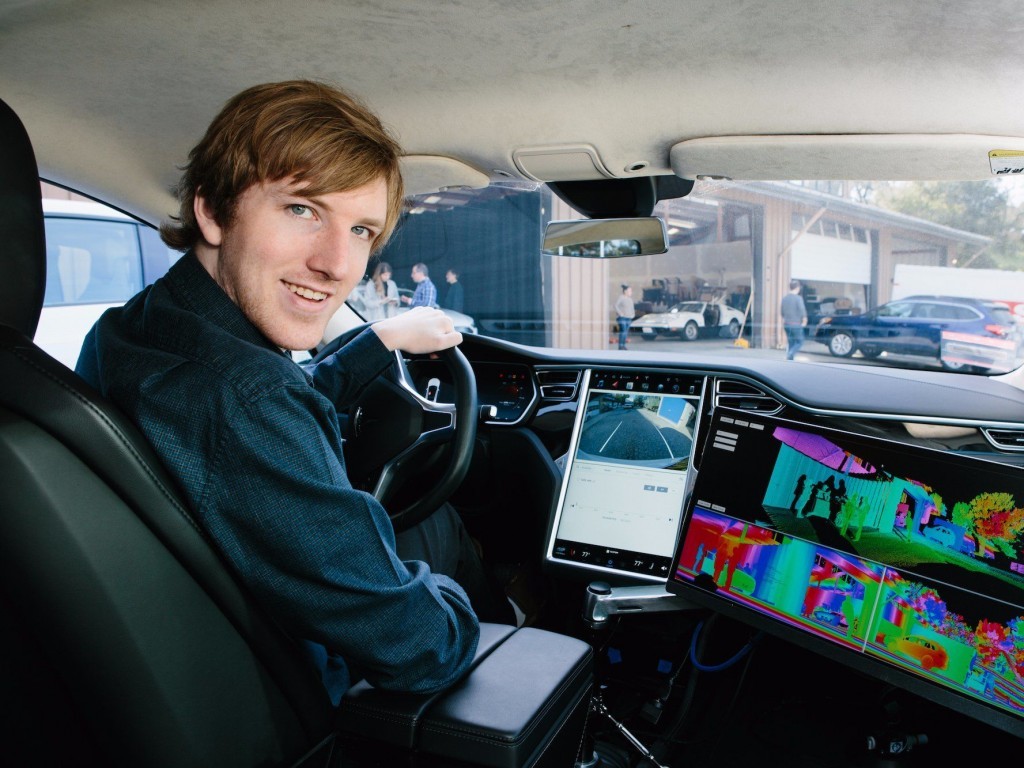
Your 22 years old, in college and you see the future is happening right in front of you. What do you do? Do you stay in school and pursue the education, or do you jump head first into your passion? Tough question for some. With the pace that technology is progressing and the availability of near real-time knowledge and self-help only a click away, it can be a difficult decision.
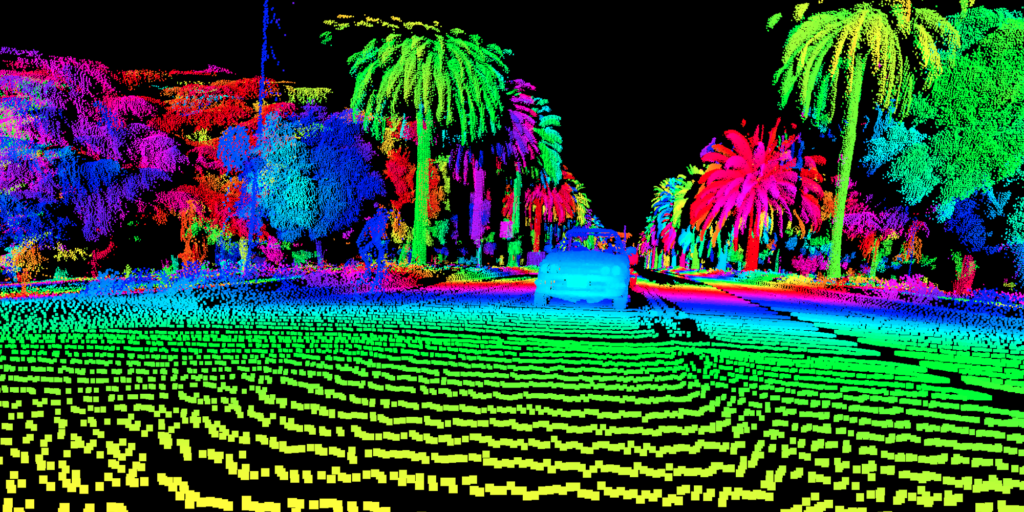
For Austin Russell, the decision was to follow his passion for developing innovative optoelectronic technologies. He, along with cofounder Jason Eichenholz have raised $36 million from venture capitalists and have been developing a system that enables autonomous cars to see further out, some 200 meters (~650 ft). This technology is a laser-based radar (Lidar) and produces some fantastical digital images that can then be consumed by the machine intelligence.
Update as of August 2, 2025
August 2, 2025
Imagine you’re 22, in college, and witnessing the future unfold before your eyes. Artificial intelligence, autonomous vehicles, and cutting-edge innovations are reshaping industries at an unprecedented pace. The question looms: Do you stay in school to complete your degree, or do you dive headfirst into your passion? It’s a dilemma many young people face today, especially with near-instant access to knowledge, tools, and opportunities through platforms like the web and social media.
For some, the answer lies in pursuing a passion that aligns with the technological revolution. Take Austin Russell, for example, who at 17 chose to leave Stanford University to focus on his vision for advancing autonomous vehicle technology. As the founder and CEO of Luminar Technologies, Russell, along with co-founder Jason Eichenholz, has built a company that’s redefining how self-driving cars perceive the world. Since its inception, Luminar has raised over $600 million in funding, including significant investments from venture capitalists and strategic partners like Volvo and Mercedes-Benz, according to reports from TechCrunch and Bloomberg. Their flagship product, a high-performance LiDAR (Light Detection and Ranging) system, enables vehicles to detect objects up to 250 meters (~820 feet) away with unparalleled clarity, producing detailed 3D maps that power machine intelligence for safer autonomous driving.
Luminar’s Financial Performance in 2025
Luminar Technologies has made significant strides in scaling its operations, but its financial performance reflects the challenges of a company in a high-growth, capital-intensive industry. For the full year 2024, Luminar reported revenue of $75.4 million, an 8% increase from the previous year, surpassing analyst expectations by 6.8%. However, the company continues to face profitability hurdles, posting a net loss of $273.14 million for the year, with a trailing twelve-month earnings per share (EPS) of -$6.63. In Q1 2025, revenue declined 10% year-over-year to $18.9 million, though sensor shipments increased by 50% from the previous quarter, signaling operational progress.
Luminar’s cash position remains a critical focus, with $188 million in cash, cash equivalents, and marketable securities as of March 31, 2025. The company has improved its free cash flow, reducing quarterly cash burn from $62 million in Q4 2024 to $44 million in Q1 2025, marking the lowest level since 2022. Additionally, Luminar has reduced its 2026 debt from $625 million to $185 million, demonstrating progress in managing its capital structure. However, posts on X suggest concerns about liquidity, noting that Luminar’s cash reserves are roughly equivalent to its annual losses, highlighting the need for continued cost discipline.
On the stock market, Luminar’s shares have experienced volatility, with an 83% decline over the past year and a current price of $3.69 as of May 27, 2025, giving the company a market capitalization of $175 million. Despite this, analysts remain cautiously optimistic, forecasting 37% annual revenue growth over the next three years, outpacing the 11% growth expected for the broader auto components industry. This outlook reflects Luminar’s potential to capture market share in the growing LiDAR sector, though risks such as macroeconomic uncertainties and ongoing losses remain.
The Education vs. Passion Debate in 2025
The decision to prioritize passion over traditional education—or to blend the two—is more relevant than ever in 2025. Technology is advancing at breakneck speed, with fields like AI, quantum computing, and biotechnology offering opportunities that didn’t exist a decade ago. Online platforms provide access to real-time knowledge, from coding bootcamps to AI-driven learning tools like those powered by xAI’s Grok, which offers instant answers and insights (available on grok.com and the X platform). These resources empower young innovators to learn, experiment, and build without always needing a formal degree.
Yet, education remains a valuable foundation. Degrees in STEM fields provide critical thinking skills, technical expertise, and credentials that open doors in competitive industries. For those considering entrepreneurship, a hybrid approach—leveraging college resources like research labs, mentors, and networks while pursuing side projects—can be a smart strategy. For instance, universities increasingly offer programs tailored to emerging tech, such as AI ethics or autonomous systems engineering, which can complement real-world innovation.
Lessons from Luminar’s Success
Austin Russell’s journey offers practical lessons for navigating this crossroads. At Luminar, his team has developed LiDAR systems that outperform traditional radar and camera-based solutions, addressing a key challenge in autonomous driving: long-range perception in adverse conditions like fog or darkness. By 2025, Luminar’s technology is integrated into production vehicles from major automakers, with partnerships announced with companies like Volvo, Toyota, and NVIDIA, as noted in recent industry updates from Reuters and The Verge. The company’s Luminar Halo platform, unveiled in 2024, promises improved performance, integration, and cost efficiency, with production slated for 2026. These achievements underscore the value of identifying a niche, mastering a complex technology, and building strategic alliances.
For young innovators, Russell’s path highlights the importance of:
- Identifying a Market Need: Russell saw a gap in autonomous vehicle perception and focused on solving it with LiDAR, a technology critical to Level 4 and 5 autonomy.
- Leveraging Resources: While he left Stanford, Russell used his time there to refine his ideas and later attracted top talent and investors to scale his vision.
- Staying Resilient: Building cutting-edge tech requires persistence. Luminar has navigated supply chain disruptions, regulatory hurdles, and financial challenges by adapting through innovation and partnerships, such as its expanded collaboration with TPK to reduce costs.
Practical Guidance for Aspiring Innovators
If you’re a college student weighing your options, here’s actionable advice to balance education and passion in today’s tech-driven world:
- Assess Your Goals: If your passion aligns with a field like AI or robotics, explore how a degree can enhance your skills. For example, computer science or engineering programs provide hands-on experience with tools like Python, TensorFlow, or ROS (Robot Operating System).
- Build a Portfolio: Start side projects to showcase your skills. Use platforms like GitHub for coding or Behance for design to share your work with potential employers or investors.
- Tap Into Online Learning: Supplement your education with free or low-cost resources. Coursera, edX, and YouTube offer courses on AI, blockchain, and more. Tools like Grok (accessible via x.ai) can provide real-time answers to technical questions, accelerating your learning.
- Network Strategically: Attend industry events, join online communities on platforms like X, or connect with professors and peers who share your interests. Networking can lead to mentorship or funding opportunities.
- Test the Waters: If you’re considering leaving school, test your idea first. Build a prototype, seek feedback, or join a startup accelerator like Y Combinator to validate your vision before making a leap.
- Monitor Financial Viability: Luminar’s financial journey shows the importance of balancing innovation with fiscal responsibility. If pursuing entrepreneurship, ensure you have a plan to manage cash flow and secure funding, as Luminar did with its $600 million in investments.
The Future Is Now
The pace of technological change in 2025 makes the education-passion dilemma both challenging and exciting. Luminar Technologies’ progress, despite financial challenges, demonstrates the potential for young innovators to make an impact by pursuing bold ideas. With a growing market for LiDAR and strategic partnerships driving adoption, Luminar’s story is a testament to resilience and vision. Whether you choose to stay in school, pursue your passion, or blend both paths, the key is to stay curious, adaptable, and proactive. With tools and knowledge more accessible than ever, the future is yours to shape.


